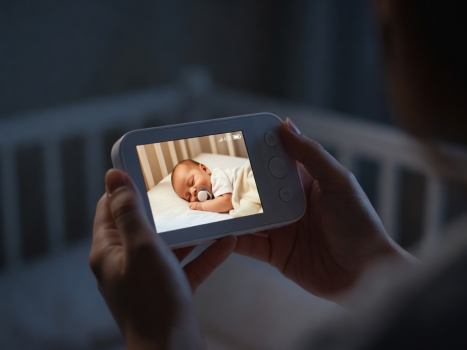
For many parents, being able to see their child during naps and nighttime sleep provides the ultimate peace of mind. Dedicated video baby monitors—systems consisting of a camera (baby unit) and a bespoke display screen (parent unit)—have been the gold standard in nurseries for years. Unlike their smart, Wi-Fi-connected counterparts, these devices operate on localized radio frequencies, creating a closed-loop system.
The Technology: FHSS Explained
The vast majority of dedicated video monitors utilize a technology called Frequency-Hopping Spread Spectrum (FHSS), typically operating on the 2.4 GHz band. This is the same frequency used by many Wi-Fi routers, but the transmission method is entirely different.
FHSS works by rapidly switching the carrier frequency among many distinct frequencies, utilizing a pseudorandom sequence known to both the camera and the parent unit. Because the frequency changes constantly (often hundreds of times per second), it is incredibly difficult for unauthorized devices to intercept or decode the video feed. This fundamental design is what gives dedicated video monitors their primary selling point: exceptional privacy and security from remote hacking.
Display and Visual Features
The parent unit is your window into the nursery. When evaluating dedicated video monitors, the quality and features of this display are paramount:
- Screen Size and Resolution: Most parent units range from 3.5 inches up to 5 inches diagonally. While you won't find the 4K resolution common in smartphones, high-end models offer 720p or 1080p HD, which is more than adequate for monitoring the rise and fall of a baby's chest.
- Night Vision: Babies sleep in the dark, making night vision a critical feature. Dedicated monitors use infrared (IR) LEDs to illuminate the room without projecting visible light that could wake the child. The quality of this IR sensor determines whether the night image is crisp and contrasted or grainy and dark.
- Pan, Tilt, and Zoom (PTZ): As infants transition to active toddlers, the ability to remotely pan and tilt the camera from the parent unit becomes invaluable. Zoom functions (optical or digital) help you investigate a lost pacifier without opening the nursery door.
Range and Environmental Factors
Manufacturers often advertise ranges up to 1,000 feet, but it is important to understand that these figures are based on clear, open-air line-of-sight tests. In a real-world home environment, the signal must pass through walls, floors, and doors.
Materials like concrete, brick, metal framing, and even dense modern insulation can severely degrade the 2.4 GHz signal. In a standard wood-frame house, you can generally expect a reliable connection across several rooms or from an upstairs nursery to a downstairs living area. However, transmitting a signal to a detached garage or a far-flung garden shed may cause video stuttering or complete signal loss.
Battery Life Considerations
While the camera is almost always plugged into the wall, the parent unit relies on an internal rechargeable battery. Because streaming continuous video and audio is power-intensive, parent unit battery life typically ranges between 6 to 12 hours depending on usage.
To preserve battery, most dedicated monitors feature a VOX (Voice Operated Exchange) or "Sleep" mode. In this mode, the screen turns off completely and the audio goes silent until the camera detects a noise exceeding a certain decibel threshold. This allows the parent unit to last through the night without being tethered to a charger, while still alerting you the moment your baby cries.
Pros and Cons
Choosing a dedicated video monitor involves weighing its specific benefits against its limitations.
The Advantages: The immediate, plug-and-play setup requires no apps, accounts, or complex router configurations. The closed-loop nature ensures that if the internet goes down, your monitor continues to work flawlessly. Furthermore, the privacy aspect is unmatched; without an internet connection, remote hacking is virtually impossible.
The Limitations: You are constrained by physical range—you cannot check the monitor from the office or while out at dinner. The picture quality, while good, rarely matches the high-definition feeds of modern smartphones used with Wi-Fi cameras. Additionally, if the parent unit breaks, replacing it is often as expensive as buying an entirely new system.
Ultimately, a dedicated video baby monitor is best suited for parents who prioritize immediate reliability and network security over the ability to monitor their child from outside the home.