For many new parents, the anxiety of bringing a newborn home centers around sleep. While video and audio monitors allow you to observe and listen, they rely on your active attention. Breathing and movement monitors represent a different category of device: proactive systems designed to alert you if a baby's regular movements cease.
Two Distinct Approaches: Pads vs. Wearables
The market for movement monitors is largely divided into two form factors, each with distinct advantages and operational quirks.
Under-Mattress Sensor Pads
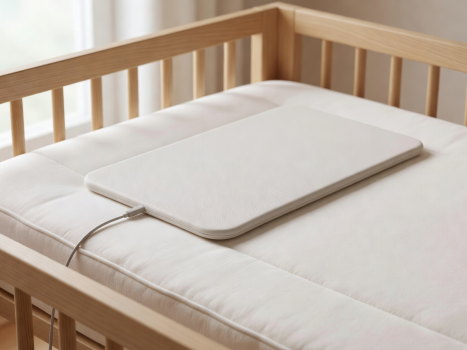
The older, highly established method involves placing a flat, highly sensitive pad underneath the crib mattress. These pads detect the micro-movements of a baby's breathing. If the pad detects absolutely no movement for a set period (usually around 20 seconds), it triggers a loud alarm.
The benefit of a sensor pad is that there is nothing attached to the baby. Once installed under the mattress, it requires no daily adjustment; you simply lay the baby down and turn the system on. However, sensor pads can struggle with very thick mattresses or memory foam, which can dampen the movement signals. Additionally, as babies grow into active sleepers who roll to the far corners of the crib, they may occasionally roll off the pad's detection zone, resulting in a false alarm.
Wearable Monitors
In recent years, wearable technology has revolutionized this space. These devices take the form of smart socks, ankle bands, or small clips that attach directly to the baby's diaper or sleepwear.
Depending on the model, wearables track physical movement using accelerometers or utilize pulse oximetry technology to track heart rate and estimated oxygen levels. Because the sensor moves with the baby, they are less prone to the "rolled off the pad" false alarms and can be used in bassinets, cribs, or even while traveling. The downside is the requirement to physically attach the device to the baby for every sleep session, and ensuring it remains charged.
The Reality of False Alarms
Any parent considering a movement monitor must understand the reality of false alarms. These devices are highly sensitive by design. A loose wearable, an improperly placed pad, or a baby simply sleeping very deeply can trigger an alert.
A false alarm at 3:00 AM can be terrifying, spiking a parent's adrenaline. For some parents, an occasional false alarm is an acceptable trade-off for the overall reassurance the device provides. For others, the anxiety of anticipating an alarm outweighs the peace of mind. It is a highly personal decision.
Not a Medical Device
It is vital to state that consumer-grade breathing and movement monitors are not classified as medical devices. They are not intended to diagnose, treat, or prevent any medical conditions, nor are they guaranteed to prevent Sudden Infant Death Syndrome (SIDS).
Medical professionals consistently emphasize that no piece of consumer technology should replace established safe sleep guidelines. A baby should always be placed on their back, on a firm, flat surface, completely free of loose blankets, pillows, or bumper pads. Movement monitors are supplementary tools for parental reassurance, not safety nets for unsafe sleep practices.
Integration with Traditional Monitors
Most movement monitors do not operate in isolation. Sensor pads are typically sold as bundles with dedicated audio or video monitors, integrating the alarm into the parent unit. Wearable monitors frequently integrate with Wi-Fi video cameras and smartphone apps, overlaying heart rate or sleep state data directly onto the video feed.
Conclusion
Breathing and movement monitors can provide immense comfort during the stressful early months of parenthood, allowing exhausted parents to sleep without feeling the need to constantly check the video feed. By understanding their limitations and acknowledging that they do not replace standard safety practices, you can effectively use these tools to lower anxiety and navigate the newborn phase with slightly more confidence.