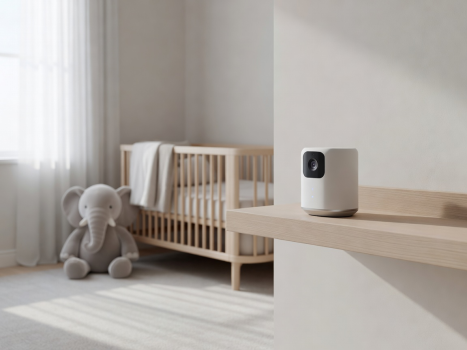
As homes become increasingly connected, baby monitors have evolved to take advantage of Wi-Fi networks and cloud infrastructure. A smart Wi-Fi baby monitor replaces the traditional dedicated parent unit with an application installed on your smartphone or tablet. By routing the camera's feed through your home internet router, these systems offer a radically different feature set compared to traditional closed-loop devices.
Unlimited Range and Remote Viewing
The defining feature of a Wi-Fi monitor is the elimination of physical range limits. Because the camera transmits data over the internet, you can view the video feed from anywhere in the world, provided your phone has an active cellular or Wi-Fi connection.
This capability is a game-changer for working parents, allowing them to check in on nap times from the office. It is equally beneficial for parents enjoying a date night, giving them the ability to verify that the babysitter has put the child to sleep without needing to ask for updates. Multiple users can usually be granted access, meaning grandparents living in other states or countries can share in those quiet moments.
App Integration and Advanced Features
Leveraging the processing power of modern smartphones allows manufacturers to build robust, feature-rich applications. Common capabilities include:
- Background Audio: A crucial feature that allows you to hear the baby's room even when the phone's screen is locked or you are using other apps, effectively turning your phone into an audio monitor.
- Push Notifications: Instead of staring at a screen, the app can send you an alert when it detects sound or motion in the crib.
- Sleep Tracking and Analytics: Some smart monitors utilize computer vision to track how often the baby moves, wakes, or cries, compiling this data into daily sleep summaries to help parents establish routines.
- Smart Home Integration: Many Wi-Fi monitors can link with voice assistants like Amazon Alexa or Google Assistant, allowing you to cast the camera feed to a smart display in the kitchen.
Security and Privacy Considerations
The primary concern associated with Wi-Fi monitors is network security. Because the camera is connected to the internet, it is theoretically vulnerable to unauthorized access if not properly secured. The headline-grabbing stories of hacked baby monitors almost always involve Wi-Fi connected devices.
To safely use a smart monitor, parents must take proactive security steps. First, ensure your home Wi-Fi router uses strong encryption (WPA2 or WPA3) and a robust, unique password. Second, always enable Two-Factor Authentication (2FA) within the monitor's app settings. This requires a secondary code sent to your phone when logging in, drastically reducing the risk of unauthorized access even if someone guesses your password. Finally, keep the camera's firmware updated, as manufacturers regularly release patches for identified security vulnerabilities.
Dependence on Infrastructure
It is important to remember that a Wi-Fi monitor is only as reliable as the networks it depends on. If your home internet goes down, or if your router struggles to push a strong signal to the nursery, the monitor will disconnect.
Furthermore, cloud-based cameras require the manufacturer's servers to remain operational. If the company experiences an outage, your monitor may temporarily lose functionality. While some models offer a "local network" mode that works as long as the router is powered on (even without an active internet connection), many rely entirely on the cloud.
Conclusion
Smart Wi-Fi monitors offer unparalleled convenience, high-definition video, and powerful analytics that can genuinely assist in sleep training. They are ideal for parents who want unlimited range and prefer the minimalist approach of using devices they already own. However, this convenience requires a commitment to digital security and an acceptance that occasional internet outages may disrupt monitoring.